
One of the most beautiful gifts we possess as home educators and parents is the ability to teach to the unique learning strengths of our children. Each child is a magnificent individual, brimming with untapped potential, waiting for us to guide them towards fulfilling their dreams. These strengths are their superpowers. They will fall back on these strengths throughout their lifetime, on their academic journey and in their career. Helping your child discover these strengths is a most wonderful gift you can offer to them.
Let’s dive in and explore how we can ignite the flame of curiosity within each of our precious learners and discover which learning style is their strength.
Discovering Your Unique Learner’s Strength
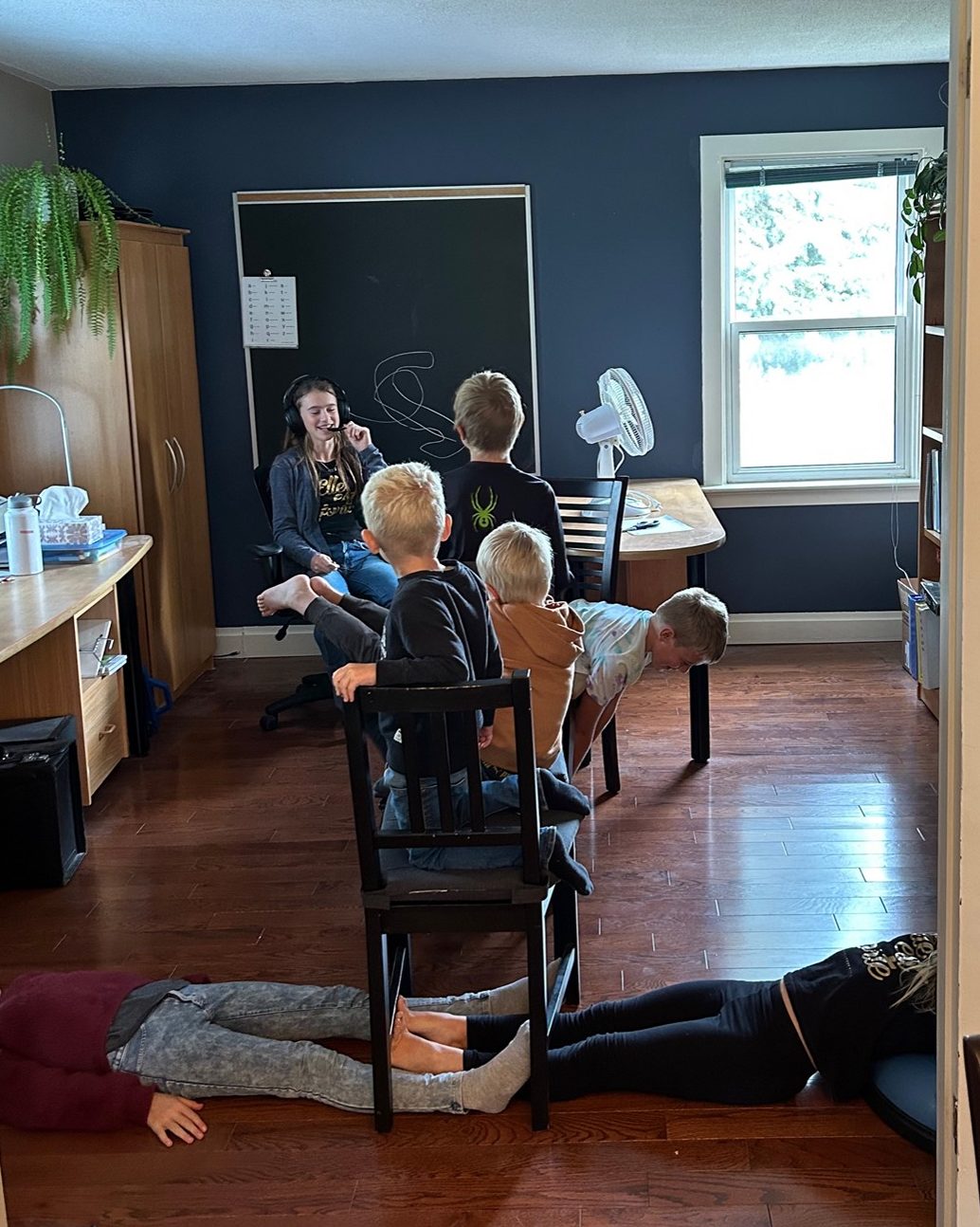
It all begins with observation and active listening. What is their natural, unique learning style? Take the time to watch and listen to your learners – notice how they interact with different subjects, problem-solving methods, and hands-on activities. What do they naturally gravitate towards when given a task to complete? One of your kiddos may want to talk it all through first. One may want to show you all the steps before they even begin. One may want to sketch the end result. One may be off and running to get their supplies before you even finished describing the task! Sound familiar?
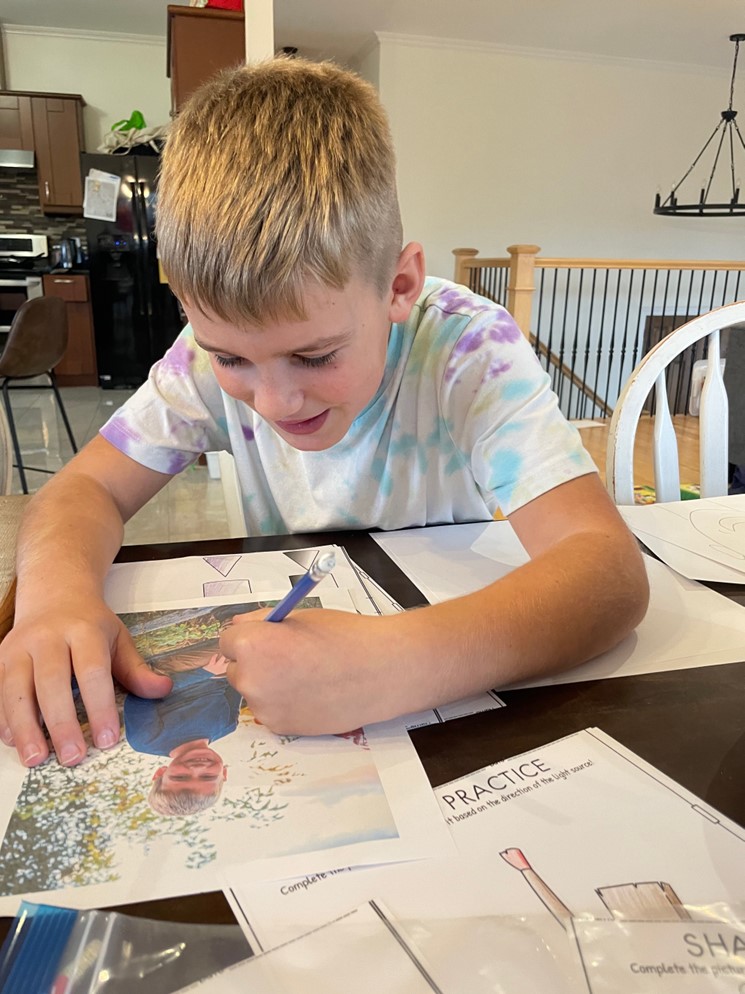
Let’s consider how you can be a student of your student and discover your unique learner’s strengths:
1. Administer a learning style checklist assessment to understand your unique learner’s strengths.
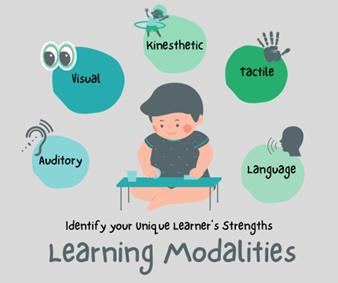
Did you know there are more than three learning styles? Researchers are now helping us understand that there are many modalities for learning. As you discover the key components of the various learning modalities, you will uncover the ideal method to support your unique learner. Download my Learning Modalities Infographic and Checklist for FREE!
2. Analyze the results to identify patterns and common characteristics among your students.
Become a student of your student! Take notice of how your child chooses to learn new material in various situations, not only in their academic setting but when wanting to learn a new physical skill or when they’re helping out in the kitchen or on the farm.
Remember that no one has just one learning style. Although your child may be strong in one learning modality, remember that we all learn best when we can see, touch, hear, say and move as we learn. They may lean into one style which becomes their superpower, but we all learn best using all the modalities!
3. Nurture and Encourage Unique Learning Styles
Now that you have discovered your unique learner’s strengths, it’s time to nurture and encourage their unique learning styles. Remember, every learner blooms at different rates, just like flowers in a garden. As their teacher, it’s your responsibility to provide the right amount of sunlight and nourishment to help them flourish.
For your visual learners, incorporating visuals such as charts, diagrams, and images can vividly illustrate complex concepts and make learning more enjoyable. Consider using colorful markers or interactive whiteboards to enhance their experience.
Auditory learners, on the other hand, thrive through sound and music. Integrate recorded lectures, podcasts, or discussions to create engaging auditory experiences. Encourage your learners to discuss and share their thoughts, as this will deepen their comprehension and allow them to learn from one another.
Hands-on learners are kinesthetic beings who truly absorb knowledge through physical experiences. Incorporate activities that require movement, such as role-playing, experiments, or building models. These experiences allow them to explore and connect with the material on a deeper level.
Language learners are always talking and repeat what they hear almost verbatim, and the sooner they can summarize the event, the quicker it is engraved in their mind. It’s very challenging for them to ‘stop the chatter’.
Tactile learners are going to touch and feel and taste everything within reach so that they can really understand its’ properties. When they are given the opportunity to feel and do, they learn! Without this input, the brain does not make the connection. Imagine these kiddos being in a no-touch museum!
4. Develop personalized lesson plans that align with each student’s learning style.
Although it seems impossible for you, the educator, to develop personalized lesson plans for every lesson, it’s not as challenging as it sounds. If you are open minded and aware of their learning styles, you will be able to be more flexible in allowing them to see, touch, hear, talk, move as they learn. Consider blending different teaching techniques to create a holistic learning environment that caters to multiple learning styles.
5. Incorporate creative teaching strategies and techniques that engage different types of learners.
As you teach a new concept or topic, consider adding something to see, something to touch, something to hear, something to say and some type of movement to enrich the learning experience. By using a variety of approaches, we can ensure that each learner feels valued, engaged, and excited about their education. Our goal is discovery learning! We want them all to love learning for a lifetime.
And finally, teaching to your unique learner’s strengths is not just about empowering them academically; it is about nurturing their self-esteem and confidence. It is about showing them that they are seen, heard, and celebrated for who they are. As guardians of budding geniuses, let’s commit to tailoring our lessons and approaches, unlocking the doors to enlightenment, love, and success. Trust me, the rewards will go beyond our wildest imaginations!

Trackbacks/Pingbacks